
Blog
The Next Generation of UAVs
The future of unmanned aerial vehicles for the geospatial profession looks to include bigger platforms for better sensors. A Drone by Any Other Name The question came up recently: “What’s the difference between a drone and a UAV?” The short answer is: none, the terms are synonymous. Which opens up a big can of alphabet...
Mapping the Damage from Superstorm Sandy
In the wake of the devastation wreaked along the East Coast by Superstorm Sandy, government agencies and private companies partnered to quickly and efficiently collect and analyze aerial data for emergency responders, relief and reconstruction workers, and the public in need. When it hit the United States as a post-tropical cyclone, Sandy had a diameter...
Choosing the Right Data Capture Tool for BIM
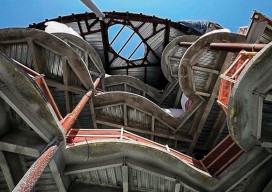
Above: This 3D image shows vertical measurements of the CUNY Applied Science Research Campus, where Bradford performed a 3D as-built measurement of all the recently constructed slab edges across six floors of the two new buildings. With the rise in demand for fast and accurate 3D construction information, laser scanning has become invaluable to many...
GIS
PSM APRIL 2013 PSM’s April issue begins the series Databased Mapping, about building the ultimate surveying database that not only stores surveying project data but also structures it to be able to produce accurate reports, analyses, and visualizations that do not depend on the way the data itself is stored.The Web of Things The theme of our...
Political Surveyor: Entering the International Market
A recent economic survey of the members of MAPPS found that U.S. firms view the international market as a bright spot in the demand for geospatial data products and services. However, entering the international market can be a difficult and time-consuming endeavor. Here are a few tips most experienced exporting professionals say are essential to successfully performing...
Business Angle: Cloud Computing – Part 2
With the background information on hypervisors (virtual machines, etc.) provided in part one (PSM October), it should be fairly clear that the cloud computing available to you today is an implementation of virtualization with public access. For example, Amazon Web Services are implemented using Xen (an open-source hypervisor), as is Rackspace. Microsoft Azure cloud services are implemented using a...
Advertisement