
Category Archives: Lidar/Imaging
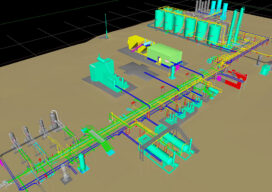
The Right Tool for the Right Layer: How Tetra Tech Rooney Is Rethinking Reality Capture
A Design Technology Manager at one of the nation’s largest engineering and technical services firms explains why a mixed-capture strategy — terrestrial scanner, SLAM, drone, and phone — beats any single technology approach. Tetra Tech is one of the largest engineering and technical services firms in the United States, a publicly traded company with operations...
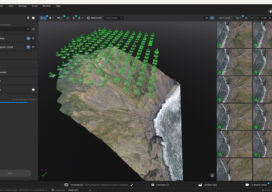
Pix4D’s Platform Moment: From Photogrammetry Engine to Enterprise Reality
Fifteen years into the UAV software revolution, Pix4D’s CTO sees Gaussian splatting, AI-assisted editing, and the smartphone-as-surveying-instrument converging into something bigger than any single tool. When Pix4D was founded in 2011 as a spin-off from EPFL’s Computer Vision Lab in Lausanne, the pitch was essentially this: drones are coming, and someone has to turn the...
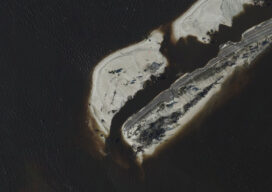
The Image as Evidence
Time-stamped, location-aware imagery has quietly crossed a threshold from documentation to trusted record. The geospatial profession is now in the business of producing evidence — and the standards have not caught up to the stakes. A surveyor flying a bridge deck, a GIS technician cataloging post-storm damage, a mapping firm delivering obliques to an insurer:...
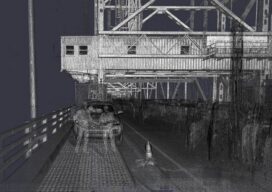
Leave No Fingerprints: Survey-Grade Accuracy in an Era of Zero Disruption
There is a version of a great survey that nobody even notices happened. No lane closures. No overnight crews in reflective vests. No targets bolted to deck surfaces. No personnel standing on live structures. No disruption to the vessels passing underneath or the aircraft taxiing overhead. The infrastructure keeps operating exactly as it did before...

The Private Geospatial Firm as Data Steward
The MAPPS community sits at the center of a transition most of its clients haven’t fully named yet. The firms that articulate it first will own the conversation. For most of its history, the private geospatial services firm has been defined by what it delivers: orthophotos, LiDAR point clouds, photogrammetric products, hydrographic surveys, corridor maps....

The Duct Tape Principle
The geospatial industry has never been short on capability. That said, industry leaders have learned to look beyond the technology, to lead with problems instead of solutions. The most successful seek to find the places where people are improvising, stitching together workarounds, doing something difficult and expensive because no better option exists, and to start...