
Blog
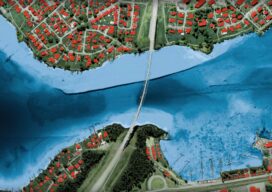
Seeing Through the Water: Inside Leica’s CoastalMapper
The new four-channel bathymetric sensor redefines what airborne hydrographic surveying can cover — and how fast Airborne bathymetric lidar has always been a physics argument. The physics are largely fixed: green laser light at 532 nanometers penetrates water in ways that infrared does not, but the water column itself attenuates the signal, and the degree...
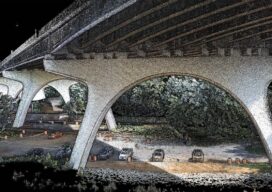
The Duct Tape Principle
The geospatial industry has never been short on capability. That said, industry leaders have learned to look beyond the technology, to lead with problems instead of solutions. The most successful seek to find the places where people are improvising, stitching together workarounds, doing something difficult and expensive because no better option exists, and to start...

Worlds Colliding: Sensor Fusion, Platform Modularity, and the New Architecture of Geospatial Data Collection
At Geo Week 2026 in Denver, one of the industry’s most experienced voices in multi-sensor positioning argues that the real transformation isn’t in any single instrument — it’s in how the instruments learn to work together. Mohamed Mostafa has been thinking about sensor fusion longer than most people in the geospatial industry have been using...

Since Precision Exists: How Topcon Is Reframing Construction Through Geospatial Intelligence
At ConExpo, some booths display products. Others project momentum. Topcon did both. From the aisle, the scene was hard to miss. The booth was busy almost constantly, each kiosk crowded with a rotating mix of current customers, future customers, partners, dealers, and industry observers and media. Demonstrations ran continuously. Conversations layered over one another. Specialists...

DroneDash and GEODNET Form Joint Venture to Eliminate Pre-Mapping from Precision Agriculture Spraying
DroneDash Technologies and GEODNET have formed a Singapore-based joint venture, GEODASH Aerosystems Pte. Ltd., to develop and commercialize a heavy-lift agricultural spraying drone that removes the pre-mapping requirement from large-scale plantation operations. Commercial deployment is targeted for Q3 2026 across oil palm and sugarcane operations in Southeast Asia, with U.S. and South American broad-acre markets...
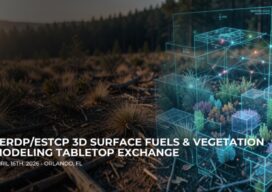
Why 3D Fuels Modeling Is Now a Geospatial Problem
As wildfire planning demands better inputs, the challenge is shifting from data collection alone to how vegetation and surface fuels are measured, classified, and turned into model-ready 3D information. Wildfire is forcing a shift in geospatial thinking. High-resolution capture is no longer the finish line. The harder question is whether vegetation and surface-fuels data can...
Advertisement